The forced AI transition is deeply unpopular
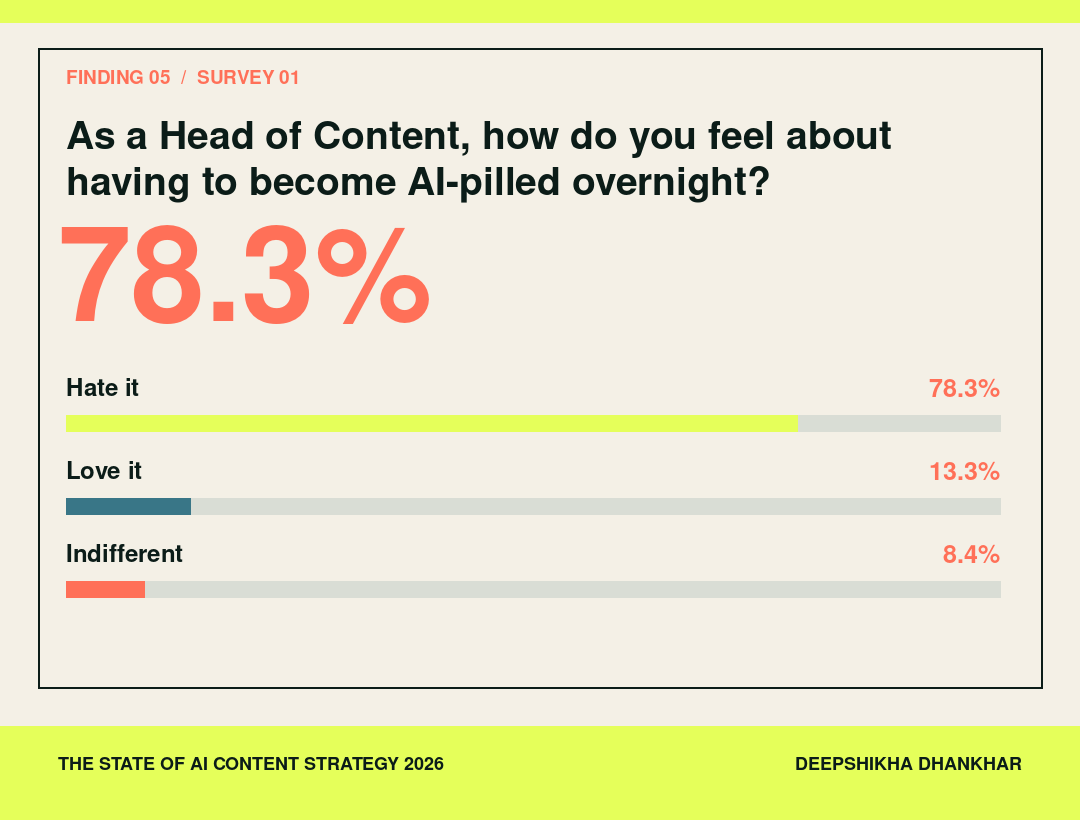
78.3% selected ‘Hate it’, compared with 13.3% who selected ‘Love it’ and 8.4% who selected ‘Indifferent’. This indicates that adoption expectations are moving faster than workforce readiness. Content and SEO teams need staged training and clearer role boundaries now; without them, transition pressure may weaken retention and the quality of strategic decisions over time.
AI search has collapsed the boundary between content and SEO
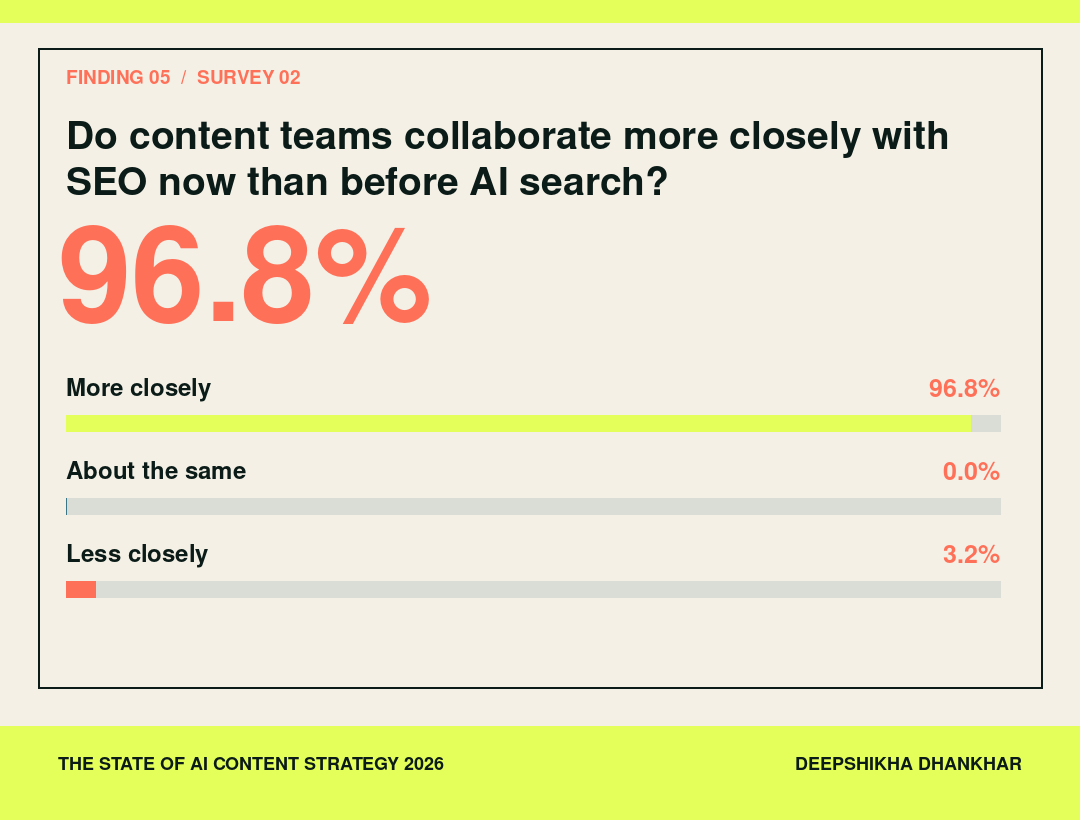
96.8% selected ‘More closely’, while 3.2% selected ‘Less closely’ and 0% selected ‘About the same’. The near-consensus indicates that AI search is already dissolving the operational boundary between the two functions. Teams need shared planning, briefs and measurement today; in future, content and SEO roles are likely to overlap more substantially around discovery and visibility.
Ownership remains unresolved
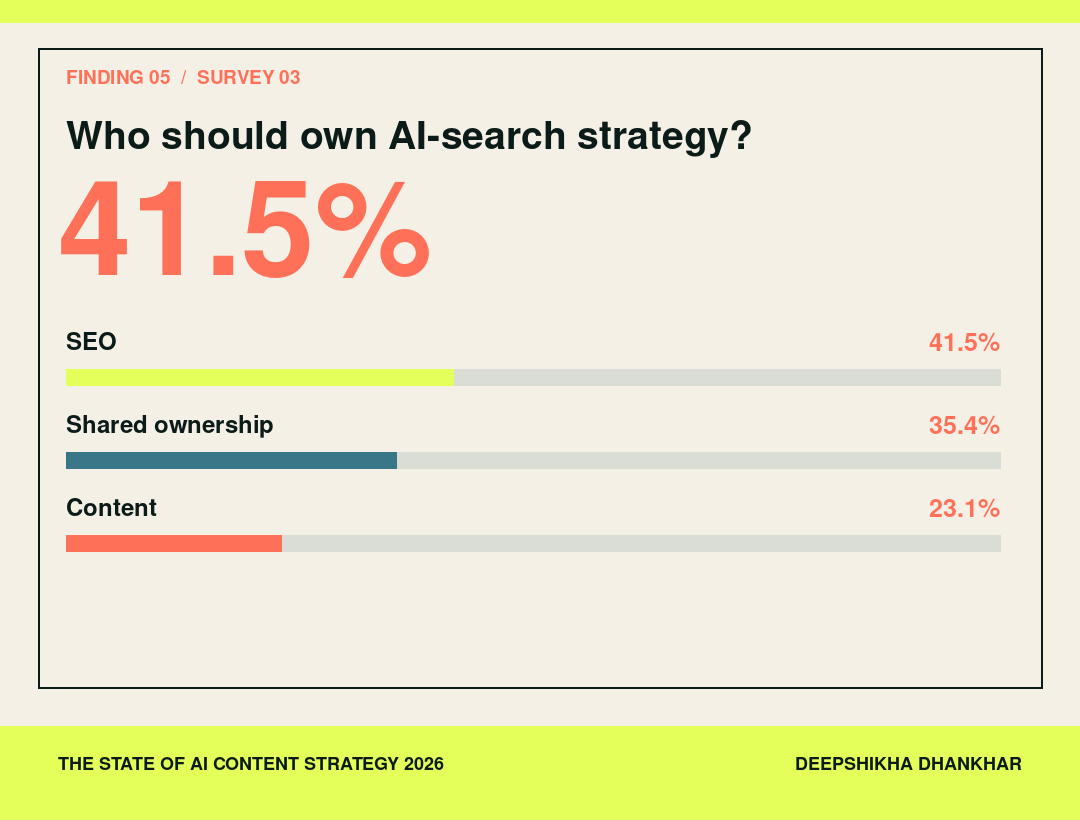
41.5% selected ‘SEO’, 35.4% selected ‘Shared ownership’ and 23.1% selected ‘Content’. No model commands a majority, so closer collaboration has not yet produced clear accountability. Teams need an explicit owner and decision process now; as AI search matures, durable governance will matter more than which function’s name sits on the work.
The budget story contradicts the replacement narrative
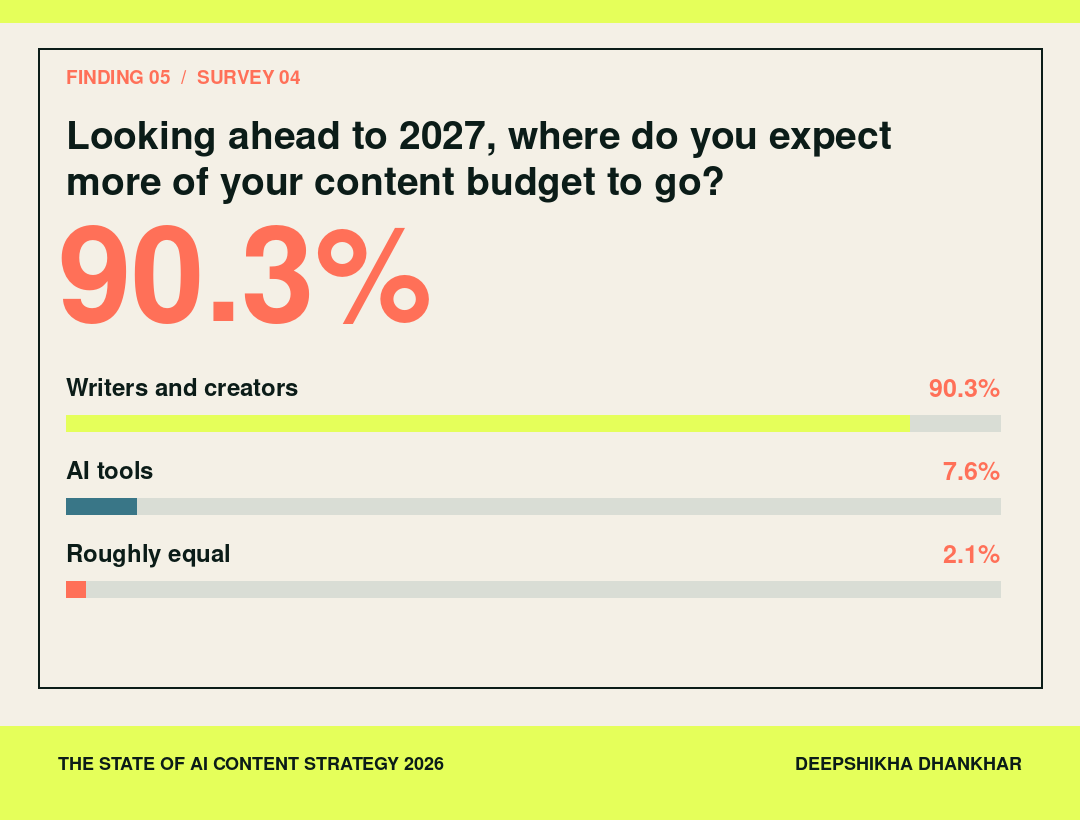
90.3% selected ‘Writers and creators’, compared with 7.6% who selected ‘AI tools’ and 2.1% who selected ‘Roughly equal’. The expected investment pattern positions AI as an augmentation layer rather than a near-term substitute for human creation. Teams should invest now in people who can use AI with judgement; future advantage is more likely to come from stronger expertise and evidence than from generating more content at lower cost.
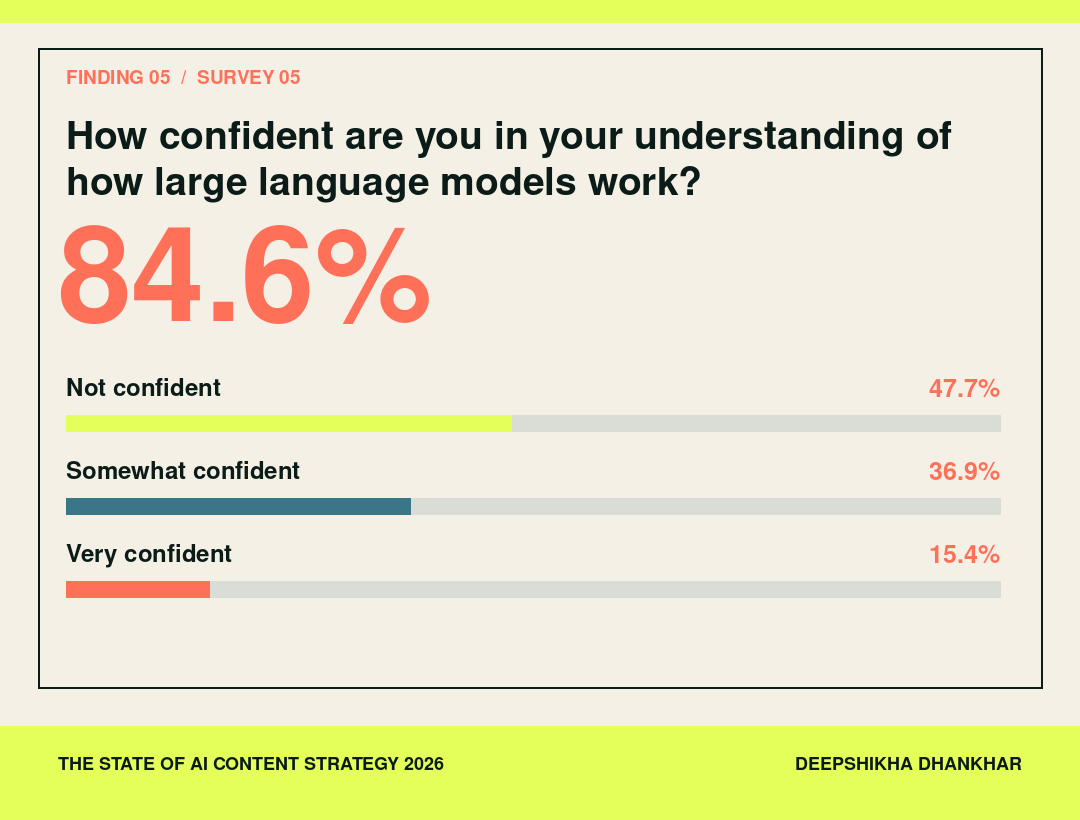
Technical confidence lags behind responsibility
47.7% selected ‘Not confident’, 36.9% selected ‘Somewhat confident’ and 15.4% selected ‘Very confident’. The 84.6% below the highest confidence level reveals a gap between expanding responsibility and technical understanding. Teams need practical LLM literacy now to evaluate recommendations and limitations; in future, that literacy is likely to become a core leadership competency across both content and SEO.
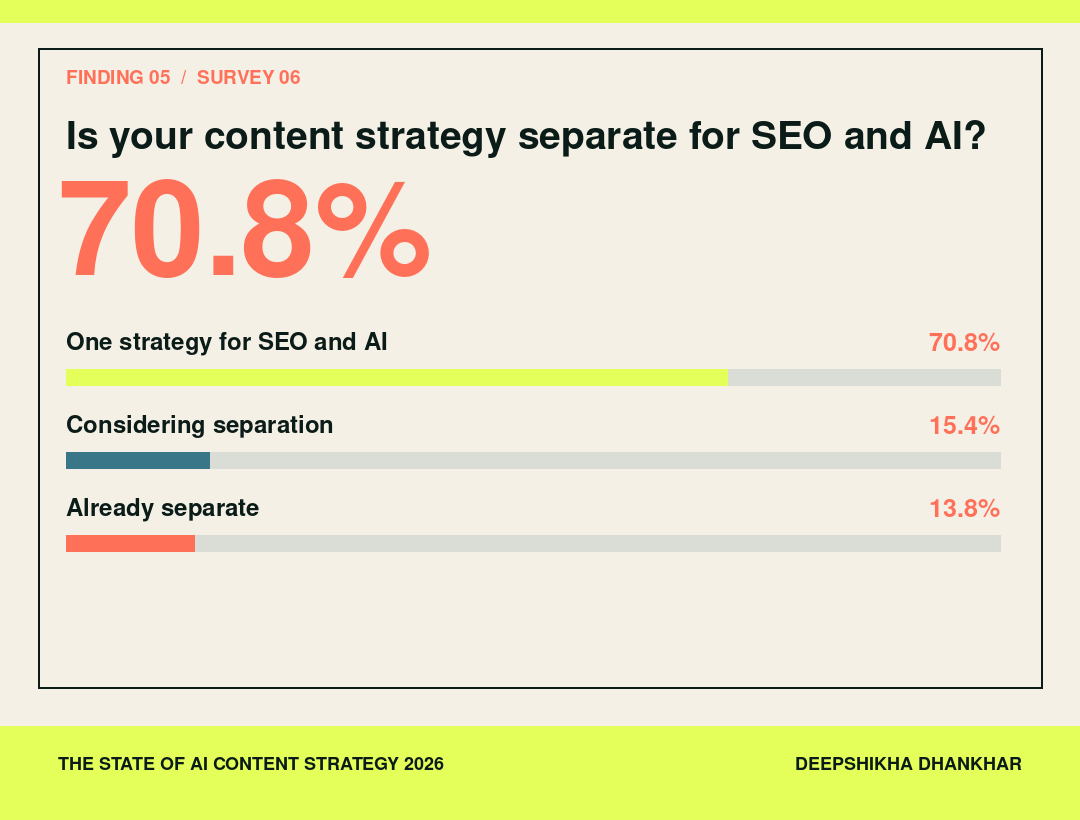
Most leaders reject a separate AI content strategy
70.8% selected ‘One strategy for SEO and AI’, while 15.4% selected ‘Considering separation’ and 13.8% selected ‘Already separate’. Most leaders therefore see AI search as an extension of search and content strategy, not a parallel discipline. Teams need one planning system with channel-specific execution today; over time, measurement will need to connect rankings, traffic, citations and business outcomes within the same view.
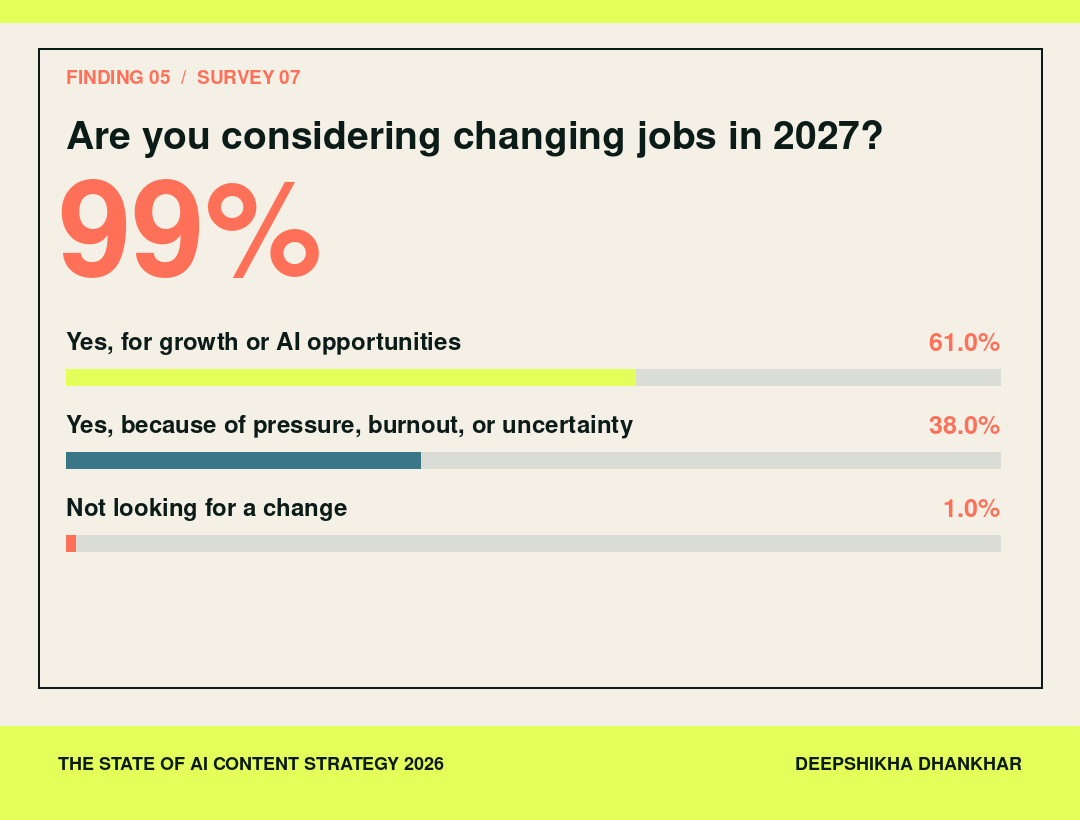
Career movement is the warning signal
61.0% selected ‘Yes, for growth or AI opportunities’ and 38.0% selected ‘Yes, because of pressure, burnout, or uncertainty’; only 1.0% selected ‘Not looking for a change’. The combined 99% inclination towards movement makes role clarity, development and workload an immediate retention issue. If teams do not address both opportunity and strain, future AI capability may be constrained less by technology than by the loss of experienced people.
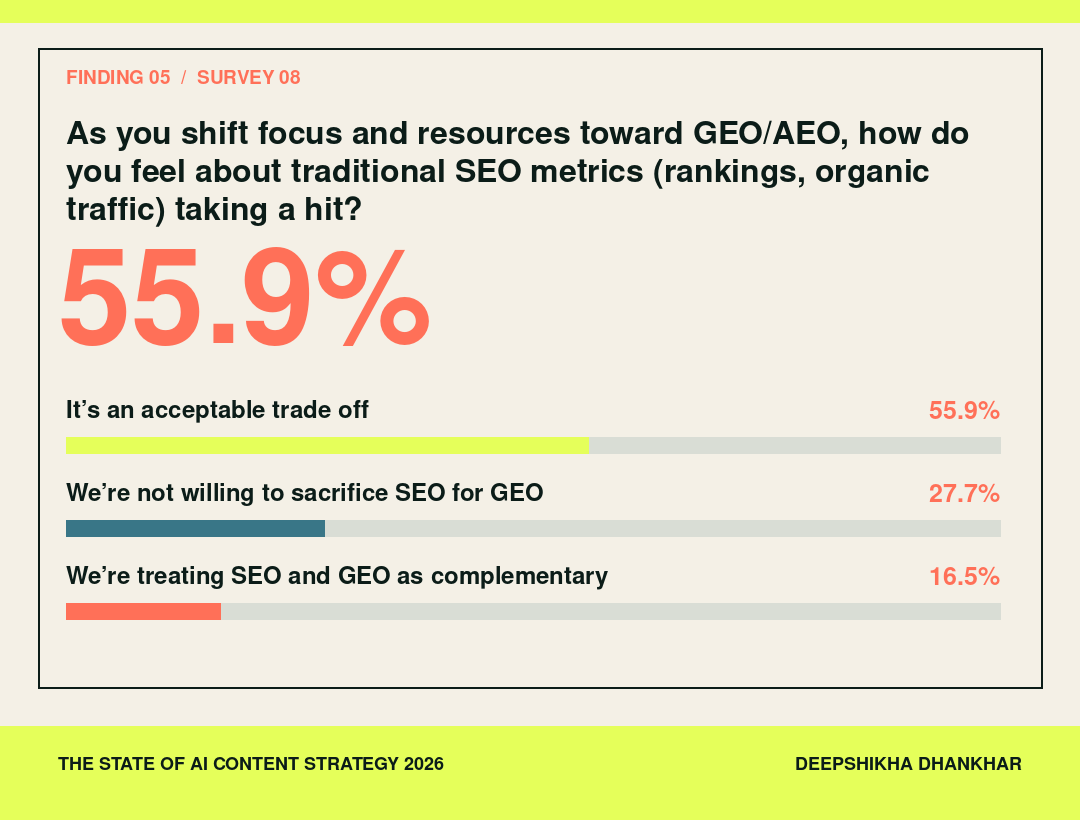
AI visibility is changing the performance bargain
55.9% selected ‘It’s an acceptable trade off’, while 27.7% selected ‘We’re not willing to sacrifice SEO for GEO’ and 16.5% selected ‘We’re treating SEO and GEO as complementary’. The majority is willing to reconsider established performance priorities, but more than two in five are not prepared to accept a simple trade-off. Teams need guardrails and a combined scorecard now; future performance models will need to balance rankings and traffic with AI visibility, citations and downstream conversion.
AI has expanded the content leader’s remit faster than it has expanded confidence.
| Question | Leading response | Share |
|---|---|---|
| Becoming AI-pilled overnight | Hate it | 78.3% |
| Collaboration with SEO | More closely | 96.8% |
| Who should own AI search? | SEO | 41.5% |
| 2027 content investment | Writers and creators | 90.3% |
| Understanding of LLMs | Not confident | 47.7% |
| Separate strategies for SEO and AI? | No — and they should not be | 70.8% |
| Considering a job change | Yes, for growth or AI opportunities | 61.0% |
| SEO impact of GEO/AEO shift | It’s an acceptable trade off | 55.9% |
Strategic takeaway